How to Create a Cozy Reading Corner in a Living Room

The best reading corners look like they were always there. A chair that happens to face the window. A lamp you can reach without standing up. A low table with room for a mug and a pair of glasses. Nothing staged, nothing fussy — just a small part of the living room that has quietly been given over to one activity.
That kind of corner is easier to build than it looks, but it rarely happens by accident. It comes down to four decisions: the chair, the light, the table and the textiles around them. Get those right and the nook will hold together even in a busy room that has to do several other jobs at once.
Start With the Chair, Because Everything Else Follows
Choose the chair before you buy a single cushion. Its height, width and depth determine where the lamp goes, how tall the side table should be and how much floor space you need to keep clear. Buy the textiles first and you will spend the next year working around them.
Sit in the chair with a book in your hands — not on your lap, in your hands, held up — and stay there for ten minutes. What you are checking for is whether your elbows can rest on the arms without hunching your shoulders. If they cannot, your arms will tire long before the chapter ends. A good reading chair gives you three things: a back that supports your shoulder blades, arms at roughly elbow height when you are seated, and a seat deep enough to hold you but not so deep that your feet leave the floor.
Some measurements worth taking before you commit:
- Seat height: around 43–46 cm for most adults, so both feet rest flat.
- Seat depth: roughly 50–55 cm; if it hits the back of your knees, it is too deep.
- Arm height: close to your elbow height when sitting, usually 15–20 cm above the seat.
- Back height: at least to the middle of your shoulder blades for real support.
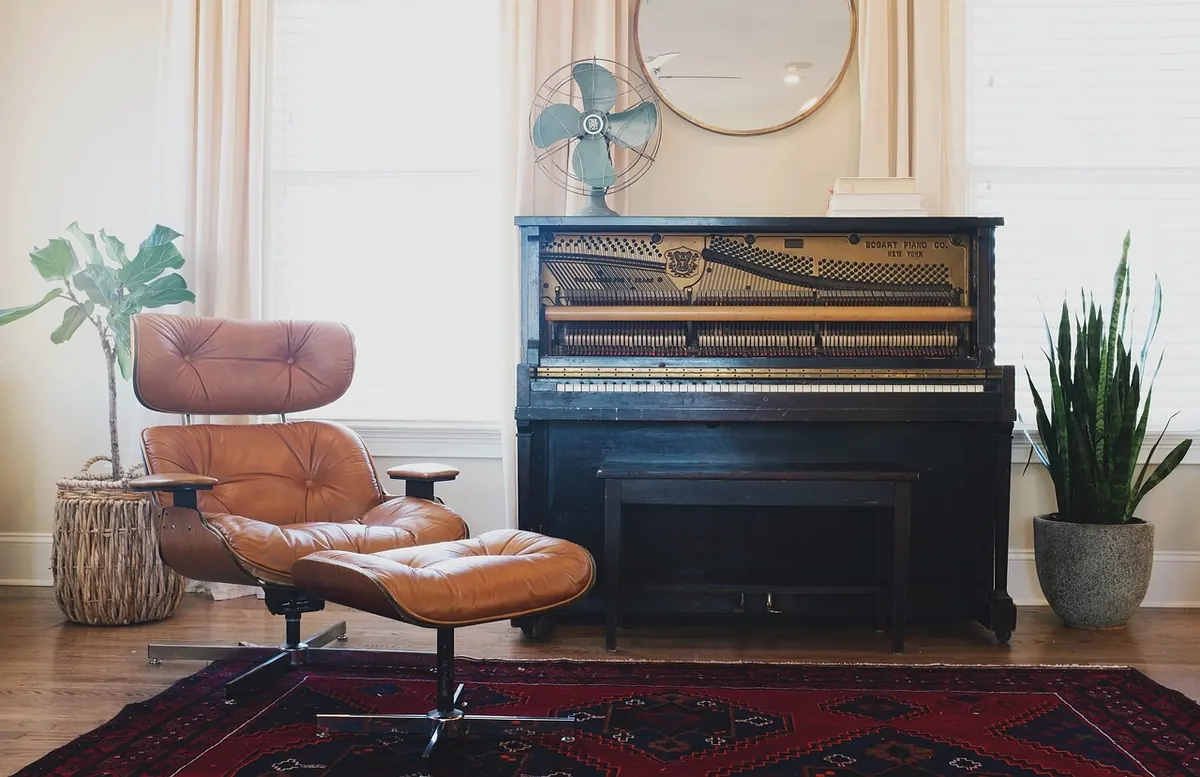
Wingback and club chairs suit this job well because they contain you, which is half the pleasure. A deep lounge chair looks wonderful and reads badly; a low, slouchy sofa does neither. If you have space for a footstool, add one. Elevating your feet slightly takes pressure off your lower back, and it gives you somewhere to rest a book when you look up. Place the chair at a slight angle to the room rather than flat against a wall. Angled furniture invites you in; furniture squared against the walls reads as storage.
Light That Flatters the Page, Not Just the Room
Most living rooms are lit for atmosphere — one overhead fixture, maybe a lamp in a far corner. Reading needs something more specific: a light close enough to reach the page without casting a shadow from your own shoulder. That means two sources, not one. Keep the soft ambient light you already have, then add a task light beside the chair.
The classic mistake is a floor lamp that sits behind you or too far to the side. Put it on the opposite side to your reading hand, so the hand holding the book does not throw a shadow across the text. The bottom of the shade should sit roughly at eye level when you are seated, or slightly below, so you see the page and not the bulb.
Choosing the bulb
Look for a warm white bulb in the region of 2700–3000K and somewhere around 400–800 lumens for a focused reading light. Too cool and the corner feels clinical; too dim and you will strain. A dimmer is worth the small extra cost, because it lets the same lamp serve as task light at nine in the evening and as soft background glow at eleven. If the corner is genuinely tight, a swing-arm wall lamp or a slim clip-on reading light does the job without eating floor space. Whatever you choose, the switch should be within reach of a seated person.
A reading lamp is not decoration. Test it at night, with the overhead light off, and see whether the page is evenly lit from the top to the bottom.
A Side Table That Earns Its Place
The table is the smallest piece of furniture in the nook and the one people think about least. Its top should sit just above the chair arm — high enough that you can set a mug down without twisting, low enough that you can reach a book without standing. A round table is unusually forgiving here: no corners to bump into, and it slips neatly into the curve of a chair.
As for size, you need room for a mug, a pair of glasses, a small stack of books and perhaps a notebook. That is more surface than a tiny drinks table offers. If the floor space is limited, a slim console behind the chair or a wall-mounted shelf at arm height works just as well. Keep the surface deliberately sparse: three or four objects at most, one of them useful. A tray is a simple way to contain the clutter and to lift the whole arrangement when you move it to dust.
Layer the Textiles and Let the Corner Soften
Textiles are what turn a chair and a lamp into a room. Start from the floor. A rug that extends at least 20 cm beyond the front legs of the chair defines the nook without walls, and it makes the corner feel warmer underfoot in winter. A small wool rug in a pattern you like is more forgiving than a pale flatweave, which shows every crumb and every footfall.
Then add three layers, and no more:
- A throw over the back or arm of the chair, in a texture that contrasts with the upholstery — a chunky wool on smooth linen, a soft cotton on a nubby weave.
- A cushion for lumbar support, small enough that it does not push you forward out of the seat.
- Something heavy or something soft on the floor: a basket for magazines, a knitted pouf for your feet, a sheepskin over the armrest.
Keep the palette narrow. Two or three tones that already appear elsewhere in the living room will make the nook look intentional rather than imported. Swap the throw and cushion with the seasons — heavier wool in autumn, washed linen in summer — and the corner stays interesting without a single new purchase. If the chair sits near a window, curtains matter too: something that can be drawn against evening glare will make the space usable for more hours of the day.
Fitting a Nook Into an Awkward Corner
Not every living room has a generous bay window going spare. A corner works if you leave 60 cm or so of clear walking space in front of the chair, and the chair does not block a doorway, a radiator or the route to the sofa. Chimney breast alcoves, the dead space beside a bookcase and the strip between a window and a wall are all fair game. In a small room, replace the floor lamp with a wall-mounted one and the side table with a narrow shelf; the nook then occupies almost no floor area but still reads as a distinct place.
Resist the urge to fill the wall behind the chair with a gallery. One framed print at eye level, or nothing at all, keeps the corner calm. The view out of the window is often the best decoration you have.
Pulling It Together in an Afternoon
You do not need to redecorate to make this happen. Clear the corner, move one chair, borrow a lamp from another room and see how it feels before you buy anything at all.
- Empty the corner and note where the light falls during the day and in the evening.
- Position the chair at a slight angle, facing into the room or toward the window.
- Add the task lamp on the opposite side to your reading hand and test it after dark.
- Bring in a table at arm height and put only the essentials on it.
- Anchor the whole thing with a rug, then add a throw and a cushion from elsewhere in the house.
- Live with it for a week before buying anything new — you will learn what is missing faster than any shopping trip will tell you.
The final test is simple. Sit down with a book and a cup of tea, and see whether you stay for a chapter or reach for your phone. If you stay, the corner is finished.
Photo: congerdesign / Pixabay